


Parenting today comes with more questions than ever. If you’ve been searching for clarity around gentle parenting vs traditional discipline, you’re likely trying to figure out what actually works for raising confident, respectful, and emotionally healthy children. The debate can feel overwhelming, with strong opinions on both sides and countless voices telling you what you “should” be doing.
This article is designed to cut through that noise. We’ll break down the core differences between these two approaches, explore how each impacts child development and family dynamics, and highlight what research and real-life experiences reveal about long-term outcomes.
Our insights are grounded in child development research, expert-backed parenting frameworks, and real family stories that reflect the challenges parents face every day. By the end, you’ll have a clearer understanding of both approaches—and practical perspective to decide what aligns best with your family’s values and goals.
Navigating today’s parenting crossroads feels overwhelming. Advice streams from pediatricians, influencers, grandparents, and algorithms, often framing gentle parenting vs traditional discipline as a moral showdown. This article cuts through the noise. Grounded in child development research and everyday family dynamics, it clarifies each approach’s goals, tools, and trade-offs. You’ll see how gentle methods emphasize emotional regulation, while conventional models prioritize structure and compliance. Here’s my recommendation: blend intention with consistency. Set firm boundaries, explain the why, and follow through. Try family meetings, clear consequences, and reflective listening. Start small, stay steady, adjust often. When in doubt, choose connection over control.
The Philosophy of Connection: Unpacking Gentle Parenting
At its core, gentle parenting rests on three pillars:
- Empathy – recognizing and validating a child’s feelings.
- Respect – treating children as whole people, not problems to fix.
- Emotional awareness – understanding behavior as communication.
When we say behavior is communication, we mean actions signal unmet needs or big feelings. A slammed door might translate to “I feel powerless.” (Honestly, some adults still do this.)
The goal isn’t short-term obedience. It’s fostering intrinsic motivation—the internal drive to make good choices because they feel right, not because of fear or stickers. Research from the American Psychological Association shows that authoritative (warm but firm) parenting is linked to stronger self-regulation and social competence in children.
In practice, it sounds like: “I see you’re very angry.” Followed by, “We don’t hit, but it’s okay to be mad.” Boundaries stay firm; tone stays calm. Collaborative problem-solving might mean asking, “What could we do next time?” (Yes, even mid-meltdown.)
Critics argue it’s too soft—part of the broader debate around gentle parenting vs traditional discipline. But gentle parenting isn’t permissive. Permissive parenting lacks limits; gentle parenting holds them respectfully.
Prediction (speculative): As mental health awareness grows, connection-based approaches will likely become the norm, not the niche—less “because I said so,” more “let’s figure this out together.”
The Framework of Structure: Defining Conventional Discipline
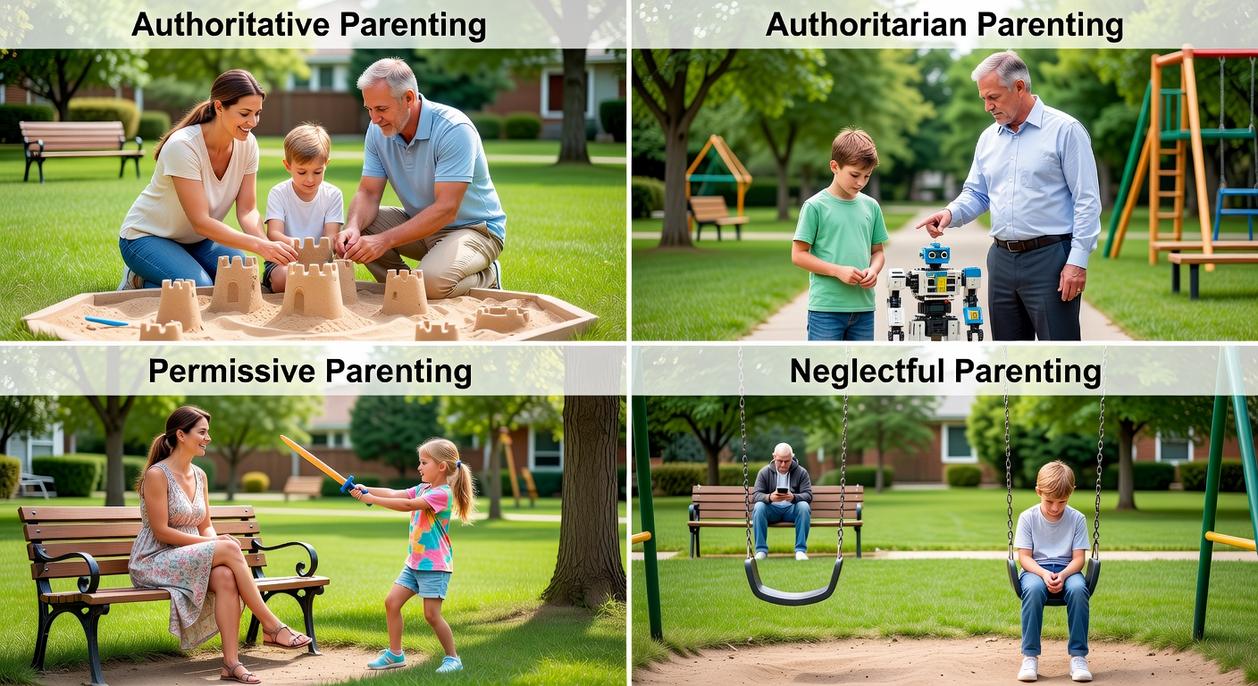
At its core, conventional discipline rests on three pillars: clear rules, predictable consequences, and respect for authority. Clear rules tell a child what is expected. Predictable consequences connect behavior to outcome. Respect for authority reinforces that parents set boundaries (not as villains, but as guides). Together, these pillars form a structured system where actions reliably lead to results.
The primary goal is straightforward: teach right from wrong and prepare children for societal expectations. In school, workplaces, and communities, rules exist. Conventional discipline mirrors that reality early. Supporters argue that when children understand rewards and punishments, they internalize accountability.
In practice, this often looks like:
- Time-outs after hitting a sibling
- Loss of privileges for unfinished chores
- Reward charts for consistent positive behavior
The logic is simple: If you don’t clean your room, you lose screen time. Cause and effect becomes tangible.
Critics in the gentle parenting vs traditional discipline debate argue this approach can feel rigid. Yet what’s often overlooked is how predictability itself can create security. When boundaries are steady—not shifting with mood—children know where the lines are (and that clarity can be calming). Structure, in this view, isn’t control; it’s a roadmap.
Head-to-Head: Two Approaches to Three Common Challenges
Parenting debates often circle around one core question: should we correct behavior or connect before we correct? The conversation around gentle parenting vs traditional discipline captures this tension clearly. I don’t pretend there’s a perfect formula—real life is messier than any philosophy. Still, comparing approaches can clarify what’s at stake.
Scenario 1 – The Public Tantrum
The gentle approach leans on co-regulation—when a calm adult helps a child’s nervous system settle (think of it as lending them your calm). A parent might kneel down, speak softly, and remove the child from the overstimulating store aisle. The idea is that tantrums signal overwhelm, not defiance.
By contrast, the conventional approach often starts with a firm warning: “Stop now, or we’re leaving.” If the behavior continues, the family exits immediately. The logic? Clear consequences teach accountability.
Some argue consequences build resilience. Others counter that a dysregulated child can’t absorb a lesson in that moment (the brain’s in fight-or-flight, not reflection mode). Research on emotional regulation suggests young children rely on caregivers to regain control before reasoning kicks in (Center on the Developing Child, Harvard University).
Scenario 2 – Sibling Conflict
With mediation, parents help each child articulate feelings—“You felt frustrated when your tower was knocked over.” This builds emotional literacy, the ability to name and manage emotions.
The conventional route separates kids, assigns blame, and issues a punishment. It’s faster, no doubt. But I’ll admit: sometimes mediation feels idealistic when dinner’s burning. Whether one method creates deeper long-term conflict resolution skills is still debated among experts.
Scenario 3 – Refusing to Do Homework
A gentle response explores root causes: Is it too hard? Is the child exhausted? Problem-solving comes first. The traditional response enforces a rule: no TV until homework is done.
Structure does matter—kids need boundaries. Yet understanding mental and emotional barriers can be equally critical. That’s why many families are exploring approaches like talking to kids about mental health in an open and supportive way.
In the end, certainty is elusive. What works beautifully for one child may fall flat for another. And maybe that humility—the willingness to adjust—is the real common ground.
Blending Connection With Consequences
Most families don’t live at the extremes of gentle parenting vs traditional discipline. Real life is messier (and louder). A hybrid approach means starting with empathy, then reinforcing clear boundaries when needed.
Here’s a simple framework:
- Step 1: Connect first. Acknowledge feelings: “I see you’re frustrated.”
- Step 2: Restate the rule calmly and clearly.
- Step 3: Apply a consistent consequence if the rule is broken.
For example, if a teen misses curfew, listen to their explanation—then enforce the agreed-upon restriction.
The key? Adjust to your child’s temperament. Some need reassurance. Others need structure. Most need both.
Building a Parenting Philosophy That Works for Your Family
The goal was never to crown a champion in the parenting wars. It’s to understand the why behind each approach. The noise around gentle parenting vs traditional discipline often leaves families overwhelmed and second-guessing every choice.
Confidence doesn’t come from copying trends; it comes from clarity. When you see each method as a tool, you can decide what fits your values, culture, and long-term hopes.
- Ask yourself: Who do I want my child to become?
That question becomes your compass. Reflect, choose intentionally, and build a style that actually works.
Building Stronger Families Starts With Intentional Choices
You came here looking for clarity on gentle parenting vs traditional discipline, and now you have a clearer understanding of how each approach shapes your child’s emotional growth, behavior, and long-term confidence. Parenting isn’t just about correcting behavior in the moment—it’s about building trust, connection, and resilience that lasts for years.
If you’ve ever felt torn between being firm and being nurturing, you’re not alone. That tension is real. You want respectful kids—but you also want a peaceful home. The good news is you don’t have to choose between structure and empathy. With the right tools, you can guide behavior while strengthening your bond.
Now it’s time to take action. Start by choosing one small shift this week—maybe replacing a reaction with a conversation, or setting a clear boundary with calm consistency. Small changes create powerful momentum.
If you’re ready for practical parenting insights that actually work in real life, explore more family-focused guidance today. Join thousands of parents who are building stronger, more connected homes—one intentional decision at a time.
 Valdanie Prattero brings a thoughtful and family-centered voice to What U Talking Bout Family, helping shape its warm perspective on parenting, child development, and meaningful family connections. With a focus on honest storytelling and modern parenting conversations, Valdanie adds a caring presence that reflects the heart of the platform.