
Tip 1: Master the Morning with the “Connection Before Correction” Rule
If your mornings sound like a drill sergeant convention (“Brush your teeth!” “Where are your shoes?!”), you’re not alone. I’ve been there. And honestly? I don’t think more reminders are the answer.
Here’s what works better: Connection Before Correction.
This rule is simple. Before you give instructions, spend 1–2 minutes connecting. A hug. A goofy dance. Asking about a dream they had. Connection means a brief, positive interaction that makes your child feel seen before being directed.
Some parents argue mornings are too rushed for this. I get it. But I’d argue you don’t have time not to. When kids feel emotionally “filled up” (think of it like an attention bucket), they’re more cooperative. Research from the Harvard Center on the Developing Child shows that positive interactions build emotional regulation skills, which directly impact behavior.
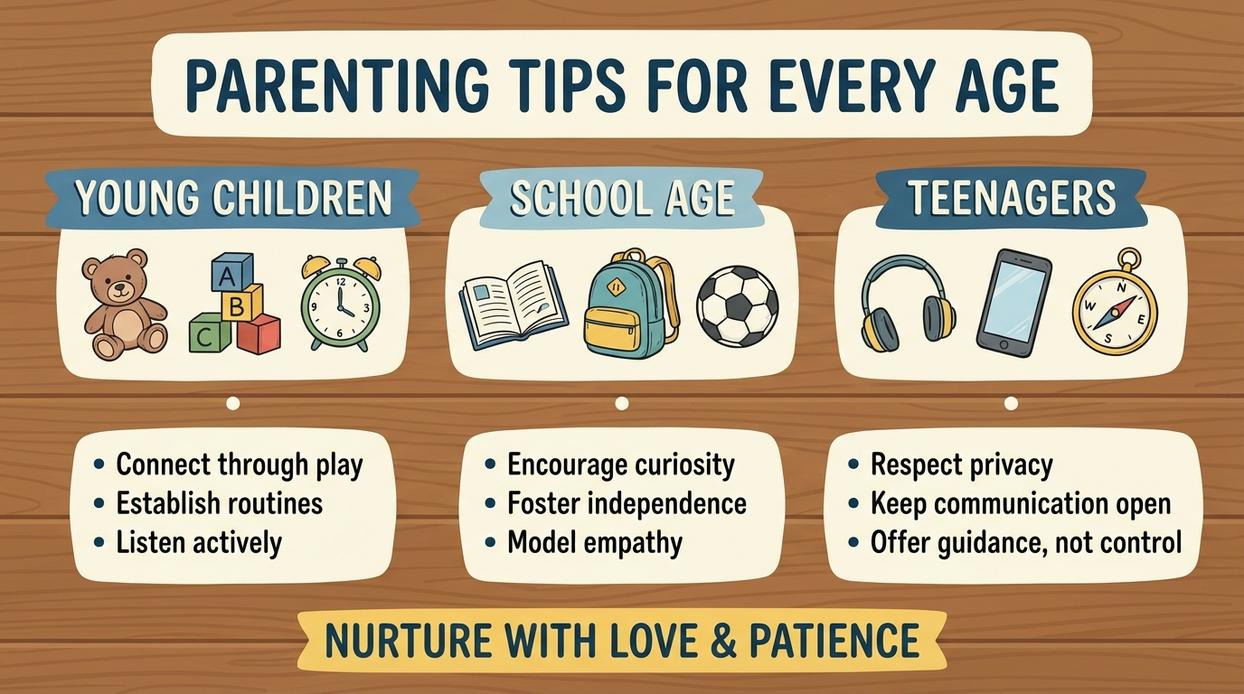
Here’s how it looks by age:
- Toddlers: Have a 30-second silly face contest while helping them get dressed. (Yes, you might look ridiculous. Worth it.)
- Elementary kids: Ask, “What’s one thing you’re excited about today?” while pouring cereal.
- Teens: Sit on the edge of their bed and ask about the game they’re playing or a friend they mentioned.
Pro tip: Pair this with everyday parenting hacks like prepping backpacks the night before.
The shift is subtle—but powerful. You stop managing behavior and start building cooperation.
Tip 2: Navigate After-School Meltdowns with a “Decompression Zone”
You know the scene. Your child walks in the door, drops their backpack, and suddenly the world is ending because the wrong snack is on the plate. It feels dramatic—but it’s usually DEPLETION, not defiance.
A Decompression Zone is a designated space and short routine (about 15 minutes) that helps your child transition from school mode to home mode. Think of it as an emotional “buffer.” School requires constant self-regulation—following rules, managing friendships, focusing for hours. According to the American Academy of Pediatrics, structured downtime supports emotional regulation and stress recovery in children (AAP, 2023).
Some parents argue, “But I need to know how their day went right away.” Fair. However, peppering them with questions too soon can overload an already maxed-out nervous system. Waiting actually leads to better conversations later (yes, really).
Why It Works
- Supports emotional regulation (the ability to manage big feelings)
- Reduces power struggles over small triggers
- Builds a predictable TRANSITION routine
Decompression Zone Checklist
- Offer a snack and drink FIRST (blood sugar matters more than you think)
- Delay homework talk for at least 15 minutes
- Suggest calming choices: quiet reading, music with headphones, drawing, or jumping outside
Pro tip: keep a small “after-school snack bin” ready so you’re not scrambling (hangry is real).
It’s not avoiding responsibility—it’s creating space so your child can reset before reconnecting.
Tip 3: Use “Sportscasting” to Validate Feelings and Reduce Tantrums
In the heat of the moment, it’s tempting to shut it down fast: “You’re fine.” “Stop crying.” “That’s not a big deal.” But here’s the catch—dismissing big feelings usually makes them bigger. (Ever notice how telling someone to “calm down” almost guarantees they won’t?)
Instead, try sportscasting—a technique where you calmly narrate what you see without judgment. Sportscasting means describing a child’s actions and emotions the way a sports announcer would call a game. For example: “You’re very angry that your block tower fell down. You worked hard on that, and now it’s on the floor.”
At first, some parents worry this sounds too soft. Shouldn’t kids just learn to handle it? Actually, research in child development shows that emotional validation strengthens regulation skills over time (Siegel & Bryson, The Whole-Brain Child). When children feel understood, their nervous systems settle faster. That’s co-regulation—when your calm presence helps their brain return to balance.
And here’s what’s in it for you: fewer explosive meltdowns, quicker recovery time, and a child who gradually learns to name their own emotions instead of acting them out. Over time, you’re building emotional vocabulary and resilience (which pays off big during the teen years).
To get started, try these sentence starters:
- “I can see you’re feeling really frustrated.”
- “It looks like you’re upset because…”
- “It’s disappointing when that happens.”
- “You didn’t want that to end.”
In other words, you’re not fixing the feeling—you’re acknowledging it. And that simple shift can change the whole game.
Building a Stronger Family, One Day at a Time
You came here looking for useful everyday parenting hacks, and now you have four simple yet powerful strategies to transform your daily interactions.
Parenting doesn’t have to feel like a constant battle of wills or a race against the clock. When frustration builds and patience runs thin, it’s easy to fall into survival mode. But small shifts can change the entire tone of your home.
By focusing on connection, validation, and positive framing, these everyday parenting hacks create a foundation of trust and cooperation. That foundation makes mornings smoother, conversations calmer, and discipline more effective.
Now take the next step: choose just one strategy to try this week. Commit to it daily. Small, consistent changes build the family dynamic you’ve always wanted—starting today.