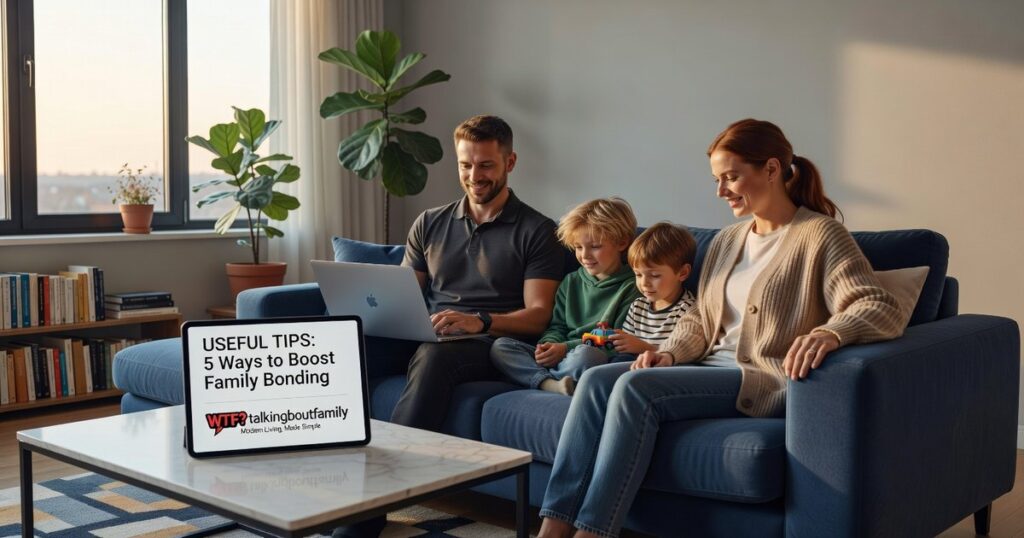
I’ve had too many dinners where everyone’s in the same room but nobody’s really talking.
You know the feeling. Your family is right there but the conversations stay shallow. Or they turn into arguments before you even realize what happened.
Here’s what I’ve learned: most families aren’t bad at communicating. They just never learned how to do it well.
I started whatutalkingboutfamily because I kept seeing the same patterns. Parents who care deeply but can’t get past surface talk. Kids who shut down because they don’t feel heard. Families who love each other but somehow keep missing each other.
This article gives you real strategies to change that. Not theory. Not feel-good advice that sounds nice but doesn’t work when your teenager rolls their eyes at you.
I’m talking about techniques you can use tonight at dinner. Ways to ask questions that actually get answers. Methods to turn those quick check-ins into real conversations.
We’ve studied what works in modern families. The ones dealing with screens and busy schedules and all the same stuff you’re dealing with.
You’ll learn how to move past “fine” and “nothing” responses. How to create space where your family actually wants to talk. And how to handle the hard conversations without everything falling apart.
No complicated systems. Just practical approaches that fit into your real life.
Understanding the ‘Why’: Common Barriers to Family Communication
You sit down for dinner and everyone’s there. But nobody’s really present.
Your teen scrolls through TikTok. Your partner checks work emails. Your youngest begs for screen time.
Sound familiar?
The Digital Divide hits hard. We’re all connected to our devices but disconnected from each other. I see families sitting in the same room having completely separate experiences. It’s what researchers call being “alone together” and it kills real conversation before it even starts.
Then there’s the ‘Busy’ Trap. We’re all exhausted. Between work, school activities, and just keeping the household running, meaningful talks feel like one more thing on an impossible list. But here’s what I’ve noticed. Busy becomes our default excuse even when we have time.
Emotional roadblocks might be the toughest barrier. Past arguments linger. We make assumptions about what our kids or partners will say before they even speak. Sometimes we avoid tough topics because we’re scared of conflict. So we stick to surface level stuff and wonder why we feel distant.
Different communication styles complicate things further. Your teenager processes emotions differently than you do. Your six-year-old can’t articulate feelings the way adults can. Parents often want direct answers while kids need space to open up gradually.
I talk to families at whatutalkingboutfamily who feel stuck in these patterns. The good news? Once you recognize these barriers, you can actually do something about them.
It starts with being honest about what’s really blocking connection in your home.
Foundational Habit #1: The Art of Active Listening
You know what’s wild?
Most of us think we’re good listeners. We nod at the right times. We make eye contact. We wait for our turn to talk.
But we’re not actually listening.
I’ll be honest with you. I didn’t realize this about myself until my own kid told me I wasn’t really hearing them. That stung. But they were right.
Here’s the difference between hearing and listening.
Hearing is passive. Your ears pick up sounds. Words go in. You register that someone spoke.
Active listening? That’s different. You’re trying to understand what’s behind the words. The emotion. The real message your kid or partner is trying to get across.
And look, I’m not going to pretend I’ve mastered this. Some days I’m distracted. Some conversations I miss the point entirely.
But I’ve learned a few things that help.
Three techniques that actually work:
First, paraphrase what you heard. Say something like “So what you’re saying is…” and repeat it back. You’d be surprised how often you get it wrong the first time.
Second, ask open-ended questions. Not yes or no stuff. Questions that invite them to say more.
Third, validate their feelings. If your kid is upset about something that seems small to you, it’s not small to them. Try “That sounds really frustrating” instead of jumping straight to solutions. When navigating the emotional landscape of gaming with your kids, remember that dismissing their frustrations can lead to a disconnect, so instead of brushing off their concerns, try to validate their feelings by saying something like, “I get it, that sounds really frustrating—whatutalkingboutfamily.Whatutalkingboutfamily As you validate your child’s feelings during their gaming frustrations, it’s essential to remember that their struggles, no matter how trivial they may seem to you, are significant to them—after all, as the saying goes, “Whatutalkingboutfamily” when it comes to the bonds we share and the
Want to practice this as a family?
Here’s a simple exercise. Set a timer for 10 minutes. Each person gets two uninterrupted minutes to talk about their day. Everyone else just listens and practices these techniques.
No advice giving. No interrupting. Just listening.
(The first time we tried this, my youngest talked for their full two minutes without stopping. Turns out they had a lot to say when we actually shut up and listened.)
Now here’s something I’m still figuring out. How much of this do kids actually absorb by watching us? The research says modeling active listening teaches empathy and emotional intelligence. But I wonder how much gets through when they’re young versus when they’re older.
What I do know is this. When I listen better, my kids open up more. They come to me with the hard stuff instead of keeping it inside.
And honestly? That’s worth the effort right there.
You can find more whatutalkingboutfamily tips that help build stronger connections at home.
Foundational Habit #2: Creating Dedicated ‘Communication Zones’

You know those moments when your kid actually opens up?
They’re usually random. In the car. Right before bed. While you’re making dinner.
Never when you sit them down and say “we need to talk.”
That’s because communication zones aren’t really about forcing conversation. They’re about creating space where talking feels natural instead of like an interrogation.
Let me break this down.
Designing Tech-Free Time
I’m not talking about banning screens from your entire house. That’s exhausting and honestly, kind of unrealistic.
What I mean is this: pick one or two moments in your day where phones don’t exist. The dinner table works for some families. For others, it’s the twenty minutes before bed.
The specific time doesn’t matter as much as the consistency. Your kids need to know when they can count on your full attention without competing with a buzzing phone.
Some parents push back on this. They say their teenagers won’t talk anyway, so why bother? But here’s what they’re missing. Silence together is still connection. You’re showing up. That matters more than you think.
The Power of the Family Check-In
This one sounds formal but it doesn’t have to be.
Set aside fifteen minutes once a week. Sunday night works well for most families. Go around and share the high and low of your week. Talk about what’s coming up.
That’s it. No agenda. No lectures.
What happens over time is pretty interesting. These check-ins become a safe space to bring up harder stuff because everyone knows they’ll be heard without judgment.
Turning In-Between Moments Into Connection
Car rides are gold for hacks whatutalkingboutfamily communication.
Something about not making eye contact makes kids more willing to talk. So instead of asking “How was school?” (which always gets “fine” as an answer), try something different.
“What made you laugh today?” or “Who did you sit with at lunch?”
Better questions get better answers.
Why Your Environment Actually Matters
Think about where you have tough conversations with your kids.
Standing in the kitchen while you’re stressed about dinner? In their room where they feel cornered? Those settings make everything harder.
A calm, neutral space changes the whole dynamic. The couch works. A walk around the block works even better.
When the environment feels safe, your kid’s defenses come down. That’s when real communication happens.
Advanced Strategies for Deeper Connection and Conflict Resolution
I still remember the morning my daughter slammed her bedroom door so hard the picture frames rattled.
She was 14. I’d just told her she couldn’t go to a friend’s party. And my exact words were “You never think about how your choices affect this family.” In a moment that echoed the frustrations of gaming decisions affecting team dynamics, she shot back with a defiant, “Hacks Whatutalkingboutfamily,” reminding me that every choice, whether in life or in a virtual world, ripples through the lives of those we care about. In that heated moment, as her words hung in the air, I couldn’t help but think how her defiant “Hacks Whatutalkingboutfamily” mirrored the very frustrations we often face in gaming, where one player’s choices can ripple through the entire team’s strategy.
The silence that followed felt like it lasted forever.
That’s when I realized something. I was doing exactly what I’d promised myself I’d never do. I was blaming instead of connecting.
Mastering ‘I’ Statements
Here’s what I learned the hard way. The way you frame what you say changes everything.
When I say “You always make me feel ignored,” I’m pointing fingers. I’m putting my kid on the defense before we even start talking.
But when I say “I feel hurt when I don’t hear back from you,” something shifts. I’m owning my feelings. I’m opening a door instead of closing one.
The formula is simple. I feel [emotion] when [situation] because [reason].
Not “You make me angry when you leave your stuff everywhere.”
Try “I feel frustrated when I see dishes in the sink because I’ve already cleaned the kitchen twice today.”
See the difference? One invites conversation. The other invites a fight.
Navigating Disagreements Constructively
Some parents think the goal is to win every argument. To prove they’re right.
I used to think that too. But winning an argument with your kid often means losing the relationship.
What if the goal was understanding instead? What if you actually wanted to know why they think what they think?
My son and I disagreed about screen time for months. I kept saying no. He kept pushing back. We were stuck.
Then I asked him something different. “Help me understand why this matters so much to you.”
He told me his friends were playing games together online. It wasn’t about the screen. It was about belonging.
We still set limits. But we set them together. And for more strategies on building these connections, check out whatutalkingboutfamily for real conversations about modern parenting.
Ground rules help too. No yelling. No name calling. If someone needs a break, we take one.
Building a Culture of Appreciation
Positive communication isn’t just about fixing problems. It’s about noticing what’s going right.
I started small. Every day, I’d tell each kid one thing I appreciated. Not just big achievements. The small stuff.
“I noticed you helped your brother with his homework.”
“Thanks for putting your laundry away without me asking.”
It felt awkward at first (like I was trying too hard). But after a few weeks, something changed. They started doing it back.
Modern Parenting Dialogue
Here’s the thing about communication strategies. They don’t work the same way for every age.
With my toddler, I get down on her level. I name her feelings. “You’re mad because we have to leave the park. I get it. Leaving is hard.”
With my teenager, I give space. I don’t force conversations. But I stay available. I ask open questions and then I shut up and listen. In the world of gaming, fostering a healthy relationship with your teenager can be as crucial as mastering the latest title, so consider incorporating some Whatutalkingboutfamily Tips to ensure open communication while still giving them the space they need. In navigating the often complex world of gaming with your teenager, embracing strategies like the Whatutalkingboutfamily Tips can transform your relationship, fostering open communication and mutual respect.
The approach changes. But the goal stays the same.
Connection over correction. Understanding over winning.
Building a Legacy of Strong Communication
You came here feeling disconnected from your family.
Maybe conversations felt surface level. Maybe conflicts kept spinning in circles without resolution.
I get it. That gap between you and the people you love most can feel impossible to close.
But here’s the truth: you now have real tools to change that. From listening without planning your response to handling disagreements without damaging relationships, these aren’t just nice ideas. They’re practices that work.
They work because they replace guessing with actual understanding. They turn fights into conversations. They build trust instead of tearing it down.
The feeling of disconnection is real, but it doesn’t have to be permanent. You can shift things by showing up differently and sticking with it.
Here’s what I want you to do tonight: Pick one strategy from this guide. Just one.
Try a tech-free dinner where everyone actually talks. Use an ‘I’ statement the next time frustration bubbles up. Ask your kid a question and really listen to their answer.
Start small. That’s how lasting bonds get built.
Your family is waiting for you to take that first step. whatutalkingboutfamily exists to help you make those connections real and keep them strong.
Go make it happen. Homepage.