

Ever tripped over a toy at 2 a.m. or opened a closet to a mountain of clothes? I’ve been there. Organizing a child’s room feels like battling chaos daily.
But here’s the deal: I figured out a way that sticks. Not from a book, but through trial and error as a parent in the trenches. You want a space that’s calm for them and stress-free for you, right?
This guide isn’t about temporary fixes. It’s about creating lasting systems. Trust me, these solutions work. to the world of kids room storage and find that hard to find peace.
Step 1: The Blueprint for Storage Success
Let’s get real about organizing a kids’ room. It’s not just about hiding clutter (tempting, though). It’s about creating a system, a real plan.
Ever tried to cram everything into a bin without thinking? It’s chaos. the ‘Sort, Purge, Assign’ method comes in.
First, let’s sort. Group those toys, books, and art supplies into categories. Building blocks over here, dolls over there.
Makes sense, right? This simple step already clears up visual clutter.
Purge next. What stays? What goes?
It’s hard, I know. But involve your kid. They’ll surprise you.
Kids often know what they’ve outgrown better than we do. Guide them gently. Donate or toss what’s not needed.
It’s liberating.
Finally, assign each item a home. This means giving everything a designated spot. No more guessing.
A kid can easily follow this. Teach them to respect their space. It’s a habit that sticks.
And hey, if you’re looking for some budget friendly family activities weekends, organizing together can be one. This isn’t just tidying. It’s setting the stage for a functional and enjoyable kids room storage system.
Are you ready?
Toy Storage: Making Cleanup Child’s Play
Toy clutter. It’s the bane of every parent’s existence. You walk into your kid’s room and it looks like a tornado hit an aisle at the toy store.
The secret to taming this chaos? Make cleanup easy for your child. Trust me, if a cleanup system isn’t intuitive, it won’t stick.
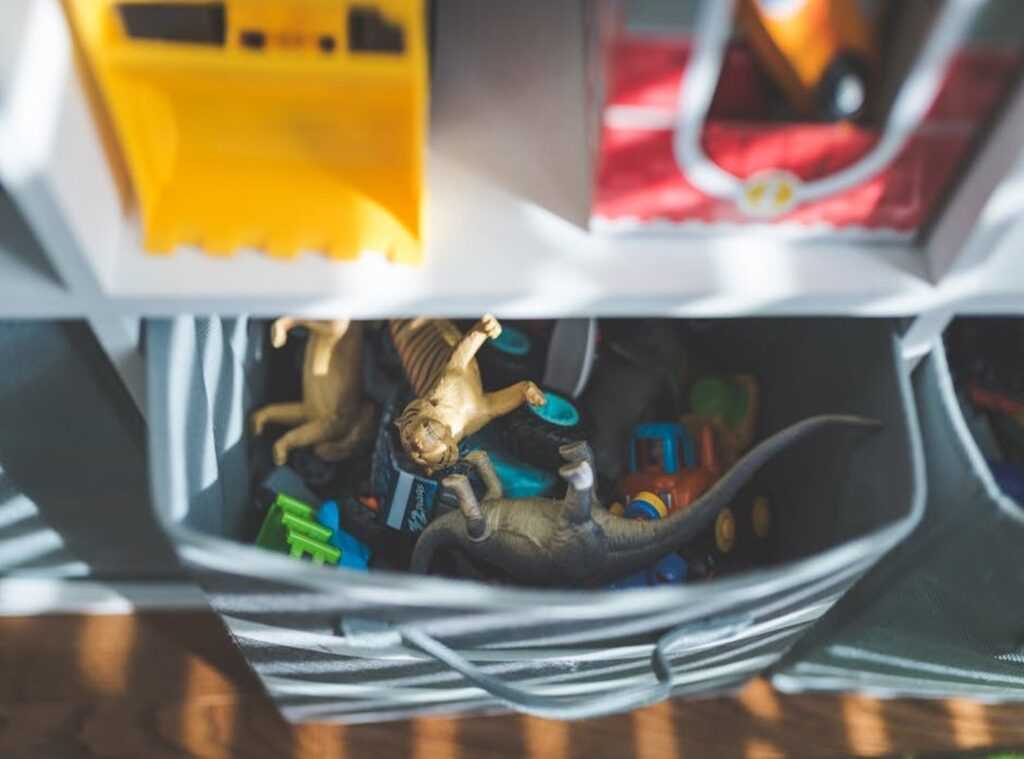
Open-front bins and clear containers are lifesavers. Kids can see their toys at a glance. If they can see it, they’ll play with it (and more importantly, they’ll know where to put it back).
Visual cues are everything. This is where cube shelving comes into play. It’s versatile, accessible, and when paired with fabric bins, it looks neat.
Throw in some picture labels for the pre-readers (or the lazy ones who pretend they can’t read yet).
Let’s talk about book storage. Forward-facing bookshelves are a must. They display covers, making books more inviting.
Remember those dusty books you never touched in the library? Same concept. Kids are more likely to grab a book if the cover’s calling to them.
Plus, it’s easier for them to put the book back correctly. It’s the little things that make a big difference.
Now, the Toy Rotation system. It’s genius. You keep most toys out of sight, tucked in a bin in the closet.
Every few weeks (or when boredom strikes), swap them out. This keeps toys fresh and exciting without adding to the clutter. Kids room storage isn’t just about space (it’s) about keeping their interest alive.
I know you’re wondering if this really works. It does. I’ve seen the magic firsthand.
And yes, it takes a bit of discipline. But once you get into the groove, it’s like riding a bike. Easier each time.
Now, go reclaim your living room floor. You’ve got this.
Taming the Wardrobe: Simple Tricks for Chaos-Free Closets
Clothing messes. They’re like gremlins, multiplying overnight. You wake up to an explosion of shirts and socks.
Sound familiar? I’ve been there, and it’s not pretty.
Let’s start with the kids. You want their clothes to be as accessible as their toys, right? Lower closet rods are your friend.
Put shirts and pants in bottom drawers. This isn’t just about tidiness. It’s about empowering your kids to pick their own outfits (with some guidance).
What about those dresser drawers that won’t close? Use dividers or small bins. Separate socks from underwear and pajamas.
Simple. Effective. You’ll actually find that one pair of socks you thought was lost forever (no magic involved, just organization).
Here’s a pro tip for planning outfits: use hanging daily organizers. You can set out clothes for the whole week. This small habit can make mornings less of a battle.
Imagine reducing that morning chaos. That’s gold for any parent.
And let’s talk about hampers. If you want your child to use it, make it fun. An open-top basket or a themed hamper works wonders.
It’s about making the process easy for them, and less frustrating for you.
Finally, a nod to the busy family life. While you’re organizing, don’t forget about streamlining your time in other areas. Check out these meal prepping hacks busy families.
Because let’s be real, you need all the help you can get. Organize wisely, and you might just tame that wardrobe beast.
Get Them Involved: The Secret to Lasting Organization
Getting kids to clean isn’t just about the mess. It’s about teaching them life skills. Yes, organizing can be fun (seriously).

Turn it into a game. Set a timer and race against it. Put on their favorite music.
Or create a ‘put-away’ scavenger hunt. Kids love a challenge and a bit of competition.
Ownership is key. Let your child decide where certain toys belong. This teaches responsibility.
It also gets them invested. And don’t forget to make them part of the labeling process. They get to feel in control.
Plus, it’s a sneaky way to reinforce their reading skills.
The magic of the ’10-Minute Tidy’ shouldn’t be underestimated. Make it part of the daily routine. A quick clean before bed or screen time works wonders.
Consistency breeds habit. Before you know it, it’ll be second nature to them.
Praise goes a long way. It’s not just about the clean room. It’s the effort they put in.
Celebrate their hard work. Positive reinforcement builds confidence. It makes them want to keep doing it.
And let’s talk about kids room storage. Having the right storage solutions makes organizing easier. It’s not just about having a place for everything.
It’s about making it accessible for little hands. When kids can easily put things away, they’re more likely to do it.
In the end, getting your child involved is the most key step. It’s a life skill that’s going to stick with them. And really, isn’t that what it’s all about?
Weekly Reset: The Key to Chaos-Free Living
You know how even the best systems need a tune-up? That’s why a weekly reset is key. I’m not talking about perfection here; it’s about keeping things from spiraling into madness.
Here’s the deal: gather the family for a quick 15-20 minute reset on Saturday or Sunday. Even kids can get in on this (and they should). Start by returning misplaced items to their ‘homes.’ Got a project cluttering the space?
You don’t want to trip over toys or search for lost socks every morning, right?
Put it away. You’d be amazed at how quickly bookshelves and drawers start looking decent again.
This isn’t just about tidying up. It’s a preventative measure. When you keep up with this routine, the room never reverts to chaos.
It’s like hitting the refresh button for your sanity. And yes, it makes kids room storage a breeze. Who doesn’t want that?
Transform Chaos Into Calm
You dream of a calm, organized space for your child, right? It’s not just a dream. Overwhelming clutter stresses everyone out.
But here’s the deal: simple, kid-friendly systems can change that. They build habits that last a lifetime. You don’t have to tackle the entire room at once.
Seriously, start small. Pick one thing, like the bookshelf or just a single drawer. Begin your journey to a more organized space today.
Trust me, a bit of time spent on kids room storage goes a long way. Ready to see the peace it brings? You got this, start now.
 Berthalizan Adams contributes a compassionate and insightful touch to What U Talking Bout Family, supporting its mission to explore family dynamics, parenting growth, and everyday moments that matter. Through a balanced and uplifting approach, Berthalizan helps create a space where families feel understood, inspired, and connected.