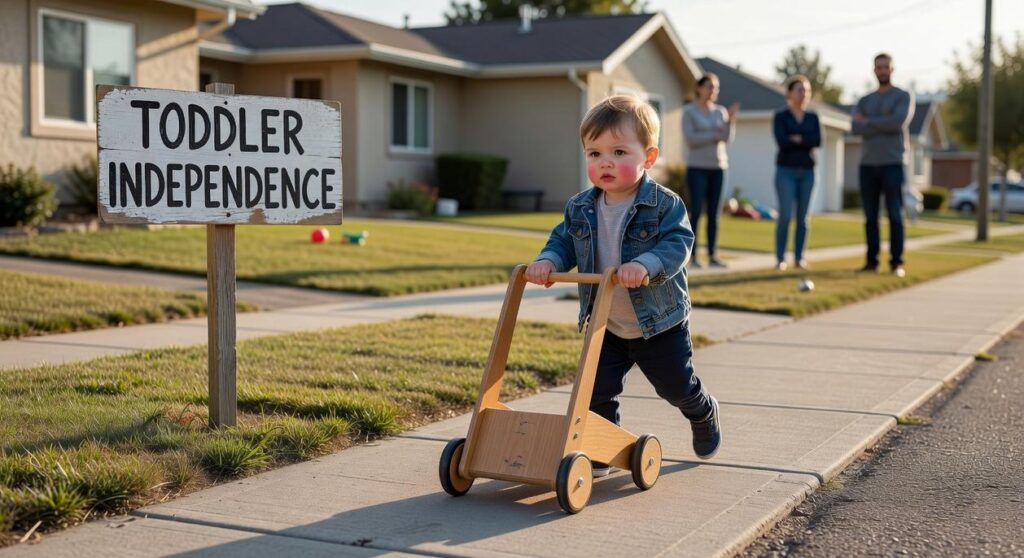
The Toddler Years (1–3 Years): The Quest for Independence

If the baby stage was about firsts, the toddler years are about “I do it myself!” This phase is fueled by a language explosion and a powerful drive for autonomy (a child’s natural desire to make their own choices). It can feel exhausting—but here’s the upside: this is when confidence, curiosity, and personality truly take shape.
Physical Milestones
Toddlers move from wobbly first steps to confident walking, running, and climbing (yes, even onto your coffee table when you look away). Fine motor skills sharpen too—stacking blocks, turning pages, and scribbling masterpieces that Picasso would respectfully nod at. These skills build coordination and body awareness, setting the foundation for sports, writing, and everyday independence.
Cognitive Milestones
You’ll notice your child following two-step commands like, “Grab your shoes and bring them here.” They begin sorting objects by shape or color and diving into pretend play—feeding dolls, driving toy cars, or hosting imaginary tea parties. The famous “Why?” questions start here, signaling critical thinking is underway. (Brace yourself.) Encouraging this curiosity strengthens problem-solving skills that benefit them for life.
Social & Emotional Milestones
The “no” phase and tantrums aren’t just power struggles—they’re practice for independence. Toddlers also engage in parallel play (playing alongside, but not directly with, other children) and show early signs of empathy, like patting a crying friend. These moments are stepping stones toward emotional intelligence—a key predictor of long-term relationship success (Harvard Center on the Developing Child).
Communication Milestones
Vocabulary can grow from a handful of words to over 200. Soon, two- to three-word sentences appear: “More juice” or “Mommy go work.” This rapid growth supports academic readiness and stronger family bonding through clearer expression.
Parenting Tip: Create a safe, toddler-proofed space for exploration. Offer simple choices—“red cup or blue cup?”—to nurture independence while avoiding unnecessary battles. Pro tip: limited choices reduce tantrums because both options work for you.
Understanding these early childhood development milestones helps you respond with patience instead of panic. And that shift? It makes the toddler years not just manageable—but meaningful.
Embracing the Journey of Growth
You came here looking for clarity about your child’s early years. Now you have a clearer roadmap of the incredible journey that unfolds in the first five years, including the early childhood development milestones that shape how your little one learns, speaks, moves, and connects.
It’s easy to feel pressure when tracking progress. Comparing timelines, wondering if you’re doing enough—it can make parenting feel like a race. But development isn’t a competition. It’s a process that unfolds uniquely for every child.
When you understand these key stages, you’re better equipped to offer the right support at the right time. That knowledge builds confidence, creating a nurturing space where your child can truly thrive.
So here’s what matters most: observe closely, play often, and be present. Celebrate the small wins. Cherish these fleeting early years. Every tiny step forward is a victory worth noticing.